
Can You Manufacture a Custom Wooden Part from a Sample Without CAD Drawings?
You have a wooden sample but no CAD file. You worry the factory will guess and send a wrong quote. I see this every week, and it has a clear fix.
Yes. A good factory can measure your sample and turn it into a production drawing. But a sample only shows what the part looks like. It does not show what the part must do. You still need to confirm tolerances, moisture content, finish, and assembly fit before you get an accurate quote.
At the last Canton Fair, a customer from Colombia came to our booth. He carried a few wire brush handles in a small bag. The handles were made of rubberwood. Each one had a soft curve along its body. He had no drawings at all. He asked me one simple question: "Can you make these?"
I said yes. Then I told him the part that matters more. A sample tells me what the handle looks like. It does not tell me what the handle must achieve. I measured the basic size and checked the wood. Then I asked him three things. Can a tolerance of ±0.3mm work on his machines? Is moisture content below 12% right for his needs? Do the dimensions I measured match what he really wants?
I always ask the last question. Wood shrinks a little when it sits for a long time. Your sample may not be the same size it was on the day it was made. I must allow for this when I measure and make new samples.
In my factory, about 80% of customers come to us with a sample, not a drawing. Only about 20% are very large buyers. Those buyers have their own R&D and design teams, and they send full CAD files. So if you only have a sample, you are not behind. You are in the majority. The real question is how we get from your sample to a part that works on your line. I will show you each step below.
What Can a Factory Measure Directly from Your Wooden Sample?
Many buyers think a missing drawing means a missing quote. That fear wastes weeks. In fact, a factory can read most of the shape from the sample alone.
A factory can directly measure overall length, width, thickness, hole position, hole diameter, and curve profile. An experienced team can also identify the wood species and surface finish. These details are enough to build a first drawing.
What I Measured on the Colombian Sample
When the Colombian wire brush handle reached my desk, I started with the basics. I measured the total length, the width, and the thickness. Then I checked the hole positions and the hole diameters. Last, I looked closely at the surface finish. I used digital calipers for the straight dimensions. I used a radius gauge for the curved parts. The curve is often the hardest part to read, so I checked it at several points along the handle.
What Experience Adds
Some details do not come from a tool. They come from years at the bench. I looked at the grain, the color, and the weight in my hand. From those signs, I confirmed the handle was rubberwood. A new engineer might miss this. A wrong guess here changes both the price and the strength of the part.
What a Sample Can and Cannot Tell Us
| Information | Can We Measure It? | How |
|---|---|---|
| Length, width, thickness | Yes, directly | Digital calipers |
| Hole position and diameter | Yes, directly | Calipers and pin gauges |
| Curve profile | Yes, with care | Radius gauge and photos |
| Wood species | Yes, by experience | Grain, color, weight |
| Surface finish type | Mostly | Visual and touch check |
| Original size before shrinkage | No | Must confirm with you |
| Required tolerance | No | Must confirm with you |
| How it fits your machine | No | Must confirm with you |
The last three rows are the gap. A sample cannot fill that gap. Only you can.
What Details Must You Decide Before We Can Get an Accurate Quote?
Most wrong quotes do not come from bad measuring. They come from missing decisions. If the buyer skips these choices, the price and the part can both be wrong.
You must decide the dimensions at assembly points and the tolerance on those points. You should also confirm wood grade, moisture content, surface finish, and quantity. Tolerance has the biggest effect on price. Tighter tolerance means higher cost.
Why Assembly Dimensions Belong to You
The most important dimensions sit where the handle meets other parts. On a wire brush, that may be the head, the wire block, or a ferrule. I can measure these points. But I cannot know how your machines hold the part or how tight the fit must be. If I guess wrong, the handles may arrive at your factory and not go into your machines. So I always ask you to decide these points.
Our Standard Settings
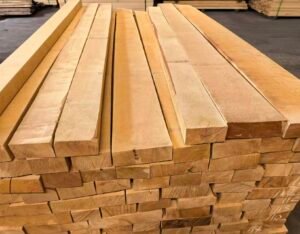
For key dimensions, we hold a tolerance of ±0.3mm. We use knot-free wood for all handles. We control moisture content between 8% and 12%. For surface finish, we can sand with 300-grit paper, apply roller coating, or use dip coating. You can see more options on our wooden brush handles page. <!-- Internal link: product page 1 -->
How Tolerance Changes the Price
Tolerance is the biggest driver of cost. Take the same brush handle. If we tighten the tolerance from ±0.5mm to ±0.15mm, the cost goes up by at least 15%. Tighter tolerance needs slower machining, more checks, and more rejected parts.
| Decision You Make | Effect on Quote | Our Default Suggestion |
|---|---|---|
| Assembly dimensions | Decides if the part works | Confirm with your machine data |
| Tolerance | Biggest cost driver | ±0.3mm on key points |
| Wood grade | Material cost | Knot-free wood |
| Moisture content | Stability after shipping | 8%–12% |
| Surface finish | Labor and coating cost | 300-grit sanding, roller or dip coat |
| Quantity | Process choice and unit price | Share first order and yearly volume |
If you do not need a tight tolerance, tell me. You may save money without losing any function.
How Do We Turn a Physical Sample into a Production Drawing?
A sample on a desk is not a plan. Without a clear process, the factory makes a copy and hopes it fits. That hope often costs a second round of samples.
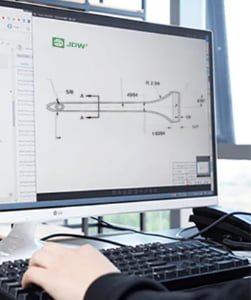
We measure the sample, confirm the dimensions with you, and create a marked drawing. Then we build tooling, shape the part, drill, sand, and check it again. For the Colombian wire brush handle, the whole process took 10 days.
Step One: Measure and Confirm
First, my team measures every dimension. Then we send the numbers to you. We ask one question: will these dimensions work in your factory? We do not move forward until you say yes. This step stops most problems before they start.
Step Two: Draw and Build Tooling
Next, we mark up a drawing and send it to the production team. We use wire cutting to make the template for the sample. At the same time, we prepare the right cutting tools. This step decides how true the curve will be. A good template keeps every handle in the batch the same shape.
Step Three: Shape, Drill, and Sand
When the tools are ready, we start making the sample. We shape the handle first. Then we drill the holes. After that, we sand the surface. For a smooth feel, we sand twice with 300-grit paper. One pass is not enough for a premium touch.
Step Four: Check and Ship
The finished sample comes back to our technical office. My engineers measure it again. They check every size against the confirmed drawing. If it passes, we send it to you by FedEx. <!-- External link: FedEx international shipping page -->
| Step | What We Deliver | What You Do | Time |
|---|---|---|---|
| Measure and confirm | Dimension list | Approve the sizes | 1–2 days |
| Draw and build tooling | Marked drawing, template | Review the drawing | 3–4 days |
| Shape, drill, sand | Physical sample | Wait | 2–3 days |
| Check and ship | Inspection result, FedEx tracking | Test the sample | 1 day |
This is what "European quality, Chinese speed" means to me. You get a checked sample in about 10 days, not 10 weeks.
Why Does an Exact Copy of Your Sample Sometimes Fail in Production?
Many buyers ask for an exact copy. It sounds safe. But a perfect copy of a flawed sample gives you thousands of flawed parts.
An exact copy can fail because the sample itself may not be standard. It may be hand-sanded, worn, or the worst piece from an old batch. Wood also moves. Changes in moisture and internal stress can make new parts crack or shrink after shipping.
The Sample May Not Be Standard
I always ask where the sample came from. It may be hand-sanded, so no machine can copy it exactly. It may be old and worn from use. It may be the one piece in a batch with the biggest error. If I copy it blindly, I copy its mistakes too.
Wood Moves After It Leaves the Factory
Your sample is stable in your climate. New wood comes from a place with different humidity. If the moisture content is wrong, the handles may crack or shrink after they arrive. Wood shrinks for two reasons. Water leaves the wood. Stress inside the wood also releases over time. You can read more about wood moisture in the USDA Wood Handbook. <!-- External link: USDA Forest Products Laboratory, Wood Handbook -->
How We Control It
Our factory has its own electric drying kilns. We dry the wood from our warehouse twice before production. After drying, we rest the wood for 72 hours in a well-ventilated warehouse. This rest lets the internal stress settle. Only then does the wood go onto the machines.
| Common Risk | Why It Happens | How We Prevent It |
|---|---|---|
| Sample is hand-made | Machines cannot copy hand sanding | Confirm the real target size with you |
| Sample is worn or old | Long use and long storage change size | Ask for original specs or a new sample |
| Sample is an outlier | It was the worst piece in a batch | Ask for more than one sample |
| Parts shrink after arrival | Moisture loss | Dry twice, keep moisture at 8%–12% |
| Parts warp or bend | Internal wood stress | Rest wood for 72 hours before machining |
The same rules apply to our wooden tool handles. <!-- Internal link: product page 2, replace with real URL -->
What Should You Send a Factory to Get a Fast and Accurate Quote?
Slow quotes usually come from long email chains. Each missing detail adds two or three days. You can cut that delay with one complete message.
Send multi-angle photos with a ruler, three to five key dimensions, the use and working environment, your expected quantity, and your target market and certification needs. With this, a factory can give you a fast and accurate quote.
How to Take Useful Photos
Put a ruler next to the part in every photo. Shoot from the top, the side, and each end. Use a plain background. Good light matters more than a good camera.
How to Measure
Use digital calipers if you can. They are cheap and much more accurate than a tape. Some curved areas are hard to measure. Do not worry about those. Just take extra photos of the curve from several angles. I can read a lot from good photos, and I will confirm the rest when I get the sample.
What You Should Send
| What to Send | Why We Need It | If It Is Missing |
|---|---|---|
| Multi-angle photos with a ruler | Shows shape and scale | We ask for the physical sample |
| 3–5 key dimensions | Sets the base size and price | We measure the sample for you |
| Use and working environment | Decides wood, finish, and moisture | We suggest a safe default |
| Expected quantity (first order and yearly) | Decides process and unit price | We quote a few volume levels |
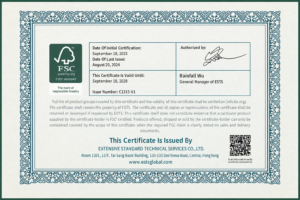
| Target market and certifications | Decides material and paperwork, such as FSC | We confirm before mass production |
FSC rules may matter for your market. You can check them on the FSC website. <!-- External link: Forest Stewardship Council -->
What Happens Next
My team usually replies within 24 hours. An engineer talks to you directly, not only a salesperson. If you need other parts, you can also see our custom wooden parts <!-- Internal link: product page 3, replace with real URL --> and wooden turning parts <!-- Internal link: product page 4, replace with real URL --> pages. Or just send your photos through our contact page. <!-- Internal link: contact page -->
Conclusion
A sample is enough to start. You confirm tolerance, moisture, finish, and assembly fit. We handle measuring, drying, tooling, and checking, so your parts work on your line.